 Image 1 of 1
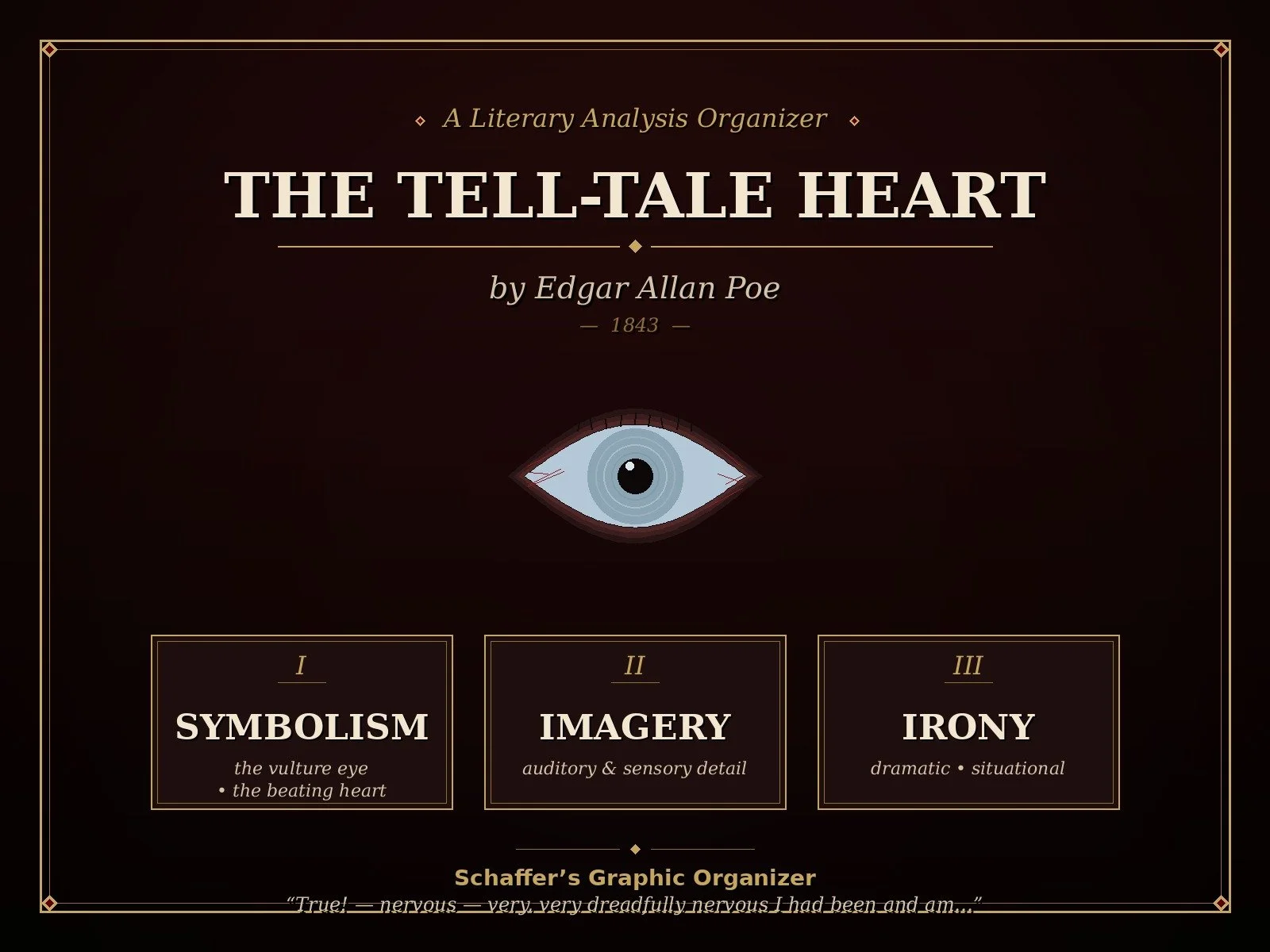
This document is a graphic organizer designed to help students plan a literary analysis essay on Edgar Allan Poe's short story, "The Tell-Tale Heart." Here is a short breakdown of its core components:
The Essay Prompt: It tasks the writer with analyzing how Poe uses symbolism, imagery, and irony to develop the central themes of guilt and madness.
Literary Devices Covered: * Symbolism: Focuses on the old man’s "vulture eye" (obsession/paranoia) and the beating heart (guilt/conscience).
Imagery: Emphasizes sensory and sound details, such as the ticking watch and the growing heartbeat, to immerse the reader in the narrator's overstimulated mind.
Irony: Explores dramatic irony (the narrator claiming he isn't mad while acting insane) and situational irony (the narrator believing he committed the perfect crime, only to be betrayed by his own conscience).
The Schaffer Method Structure: It provides a structured formula for building analytical body paragraphs using specific elements:
TS (Topic Sentence): States the literary device and the main claim.
CD (Concrete Detail): A direct quote from the story used as evidence.
CM (Commentary): Your analysis explaining what the quote shows (requires two commentary sentences per concrete detail).
This document is a graphic organizer designed to help students plan a literary analysis essay on Edgar Allan Poe's short story, "The Tell-Tale Heart." Here is a short breakdown of its core components:
The Essay Prompt: It tasks the writer with analyzing how Poe uses symbolism, imagery, and irony to develop the central themes of guilt and madness.
Literary Devices Covered: * Symbolism: Focuses on the old man’s "vulture eye" (obsession/paranoia) and the beating heart (guilt/conscience).
Imagery: Emphasizes sensory and sound details, such as the ticking watch and the growing heartbeat, to immerse the reader in the narrator's overstimulated mind.
Irony: Explores dramatic irony (the narrator claiming he isn't mad while acting insane) and situational irony (the narrator believing he committed the perfect crime, only to be betrayed by his own conscience).
The Schaffer Method Structure: It provides a structured formula for building analytical body paragraphs using specific elements:
TS (Topic Sentence): States the literary device and the main claim.
CD (Concrete Detail): A direct quote from the story used as evidence.
CM (Commentary): Your analysis explaining what the quote shows (requires two commentary sentences per concrete detail).